
Can Intensive Shrimp Farming Work Alongside Mangrove Restoration?
Intensive shrimp farming is often tied to a familiar trade-off: higher output usually comes with higher pressure on water, energy use, and the surrounding environment.
That is also why mangrove restoration is often treated as a separate conversation. One side is about production and farm performance. The other is about environmental recovery.
But from a long-term operating perspective, separating the two may no longer make sense.
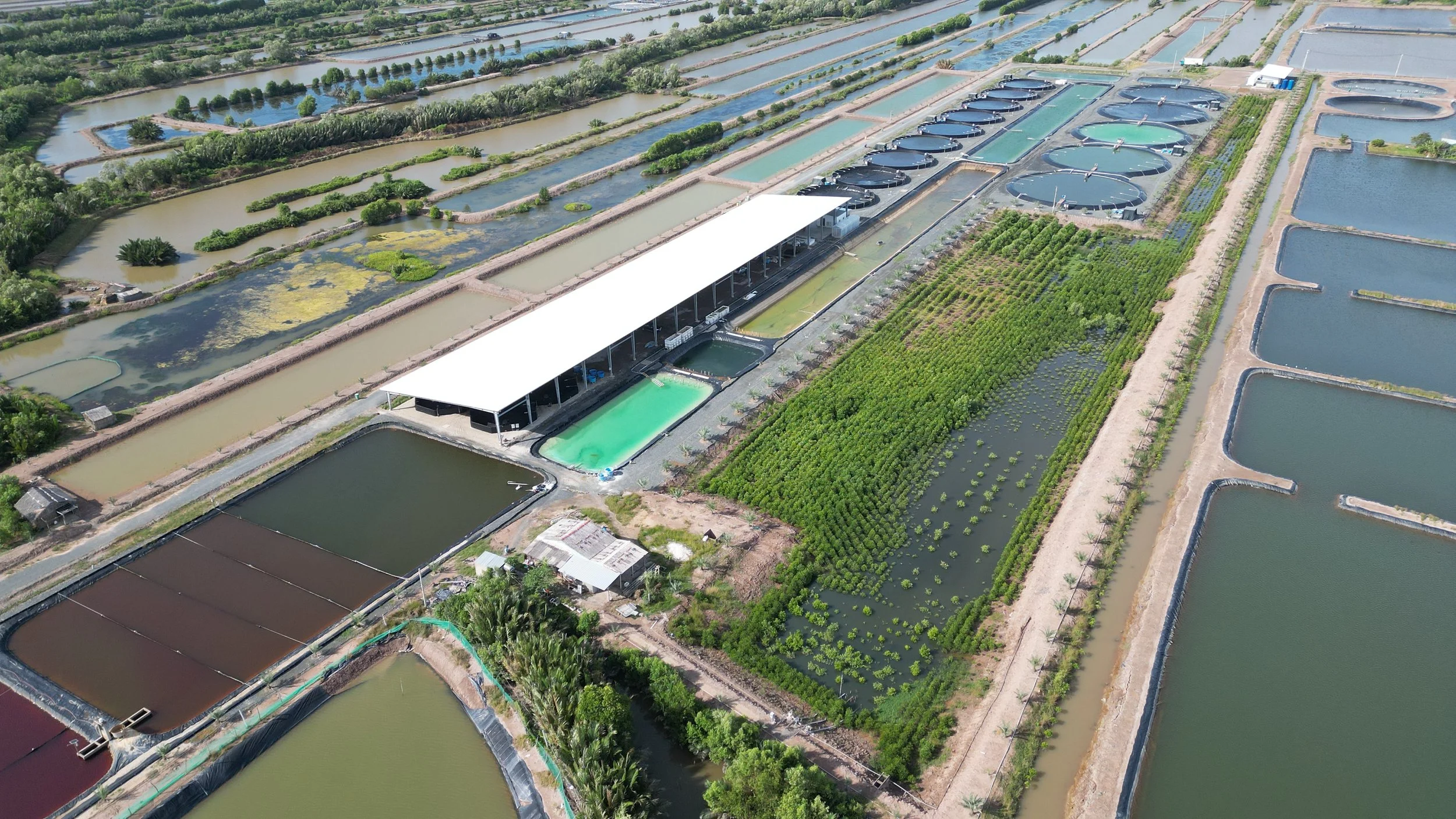
TOMGOXY Zero at Salicornia Farm, Vietnam — integrating intensive shrimp farming, mangrove restoration, and commercial viability in one model.
At RYNAN Smart Aquaculture, TOMGOXY was never developed as a set of standalone technologies aimed at improving one part of the farm at a time. The direction behind TOMGOXY is broader than that. It is built around a farming model where farm design, pond environment control, resource use, and long-term operational stability need to work together from the start.
TOMGOXY Zero builds further on that direction. In this project, RYNAN is working with Van Oord Ocean Health and Larive International on a model that brings intensive shrimp farming, mangrove restoration, and commercial viability into the same development logic, instead of treating them as separate goals.
Environmental performance cannot be added later
In practice, many farming models still follow a familiar sequence: build the farm for production first, then look for ways to reduce environmental impact later.
That approach may help a farm move faster in the early stage. But over time, it often creates limitations. When environmental performance is not built into the design and operating model from the beginning, later adjustments tend to be harder, more expensive, and less effective.
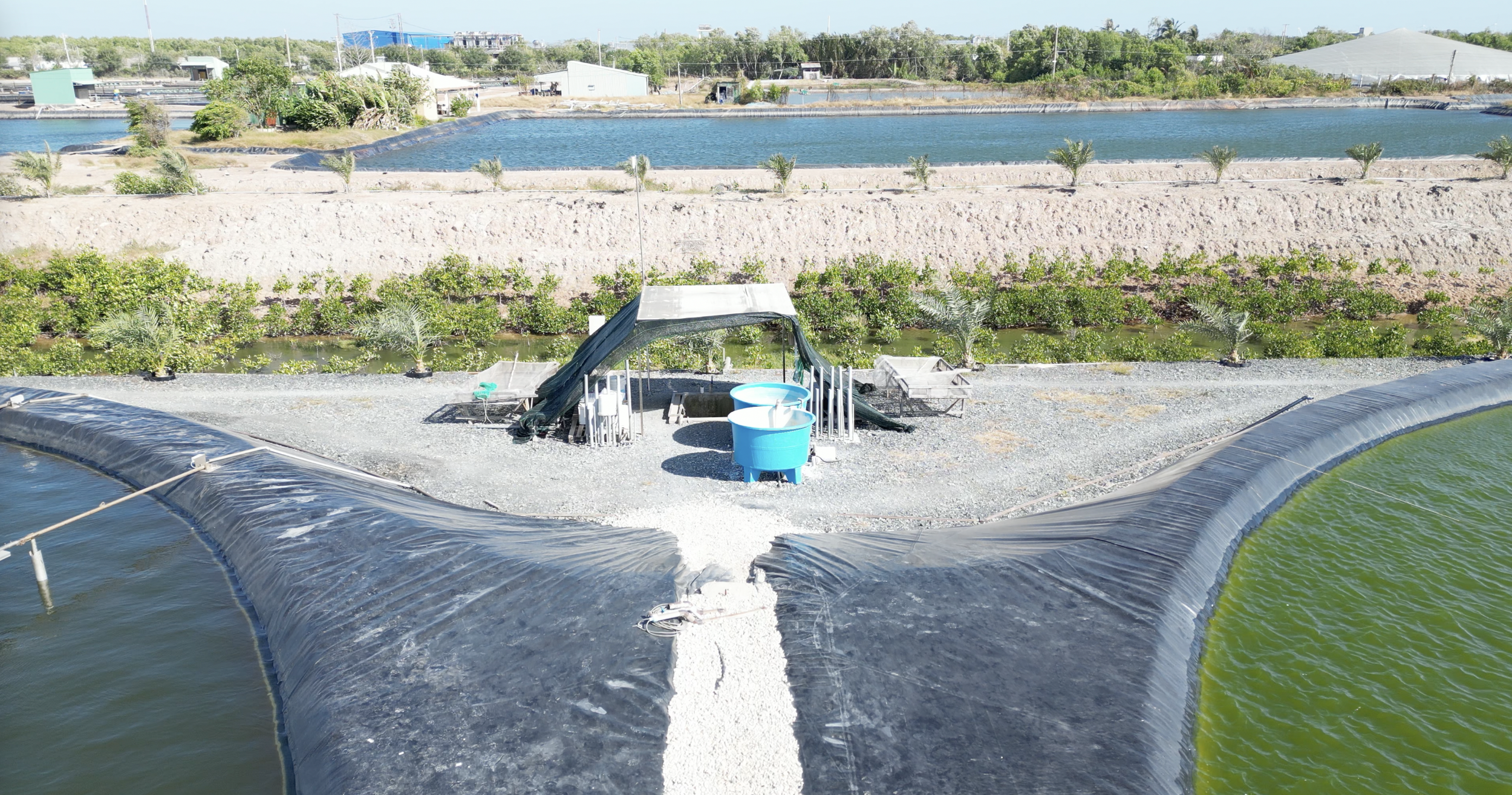
Pond drainage is integrated into a mangrove filtration flow to reduce nutrient load before water is discharged or returned to the farm system.
TOMGOXY Zero takes a different route. At the pilot site in Salicornia Farm in Vietnam, production, filtration, and mangrove restoration are developed as part of the same system. The environmental side is not treated as an external layer. It is part of how the model is structured from the start.
That matters because performance in intensive shrimp farming rarely comes from one machine or one isolated solution. It comes from how the system works as a whole: how water moves, how waste is handled, how closely pond conditions are tracked, and how early the team can detect and respond to problems.
That is also how RYNAN has approached TOMGOXY from the beginning: not as a collection of separate technologies, but as an operating system. TOMGOXY Zero extends that same thinking by pushing the environmental side deeper into the model itself.
What TOMGOXY Zero is really testing
What makes TOMGOXY Zero worth watching is not simply the addition of a mangrove component.
The more important point is that operational performance, environmental impact, and commercial viability are being worked through together, inside the same model.
That is not a small shift.
The shrimp industry does not lack good-looking sustainability narratives. The harder challenge is building a model that can still run well, reduce environmental pressure, and maintain enough commercial logic to hold up over time.
That is where TOMGOXY Zero becomes relevant. It reflects a more practical question for the industry: can intensive shrimp farming be developed in a way that improves environmental performance without disconnecting from operational reality and market requirements?
The real challenge is not choosing between performance and sustainability
The bigger question for shrimp farming may no longer be whether the industry should choose between performance and environmental responsibility.
It is whether farming models can be designed well enough to hold both.
That is also the logic behind TOMGOXY, the farm performance comes from how the whole system works together, not from isolated solutions. TOMGOXY Zero builds on that same thinking by bringing mangrove restoration, lower environmental impact, and commercial viability into the same operating model.
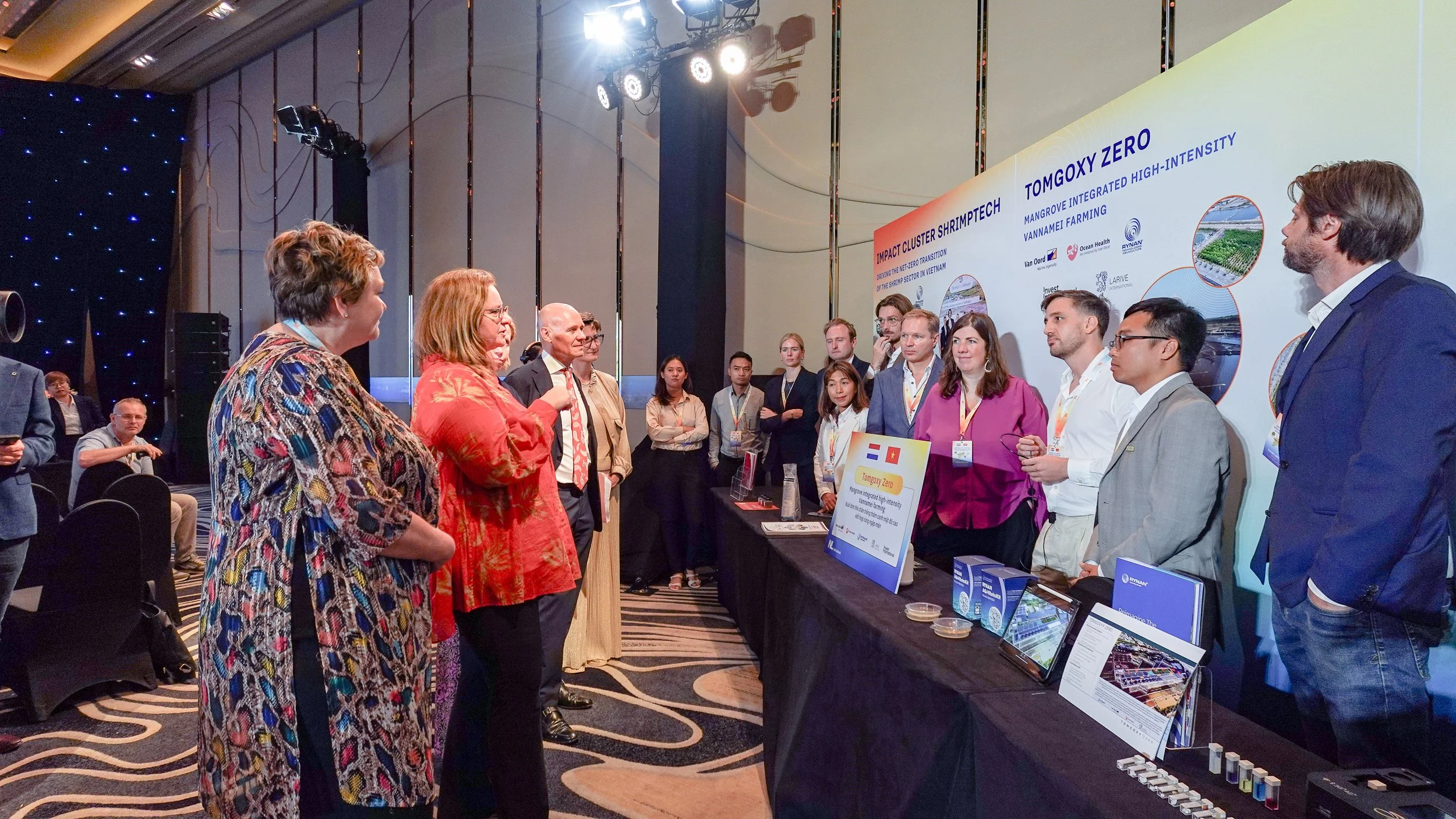
TOMGOXY Zero presented at the Vietnam–Netherlands Business Forum as part of a broader discussion on integrated shrimp farming, environmental performance, and commercial viability.
To know more about the TOMGOXY Zero Certification Assessment, click here. Additionally, contact us to understand or get involved in our TOMGOXY initiatives.