

Why Shrimp Farm SOPs Don’t Ensure Stability
In intensive shrimp farming, having a well-documented SOP is often seen as a sign of professionalism. Feeding schedules are structured, water quality is monitored, and incident response steps are clearly written down. On paper, everything looks under control.
And yet, many farms with complete documentation and disciplined teams still struggle with unstable ponds, shrimp diseases and oxygen fluctuation. Additionally, environmental conditions shift in ways that are hard to predict.
So the question is worth asking: if the process is correct, why isn’t the result stable?
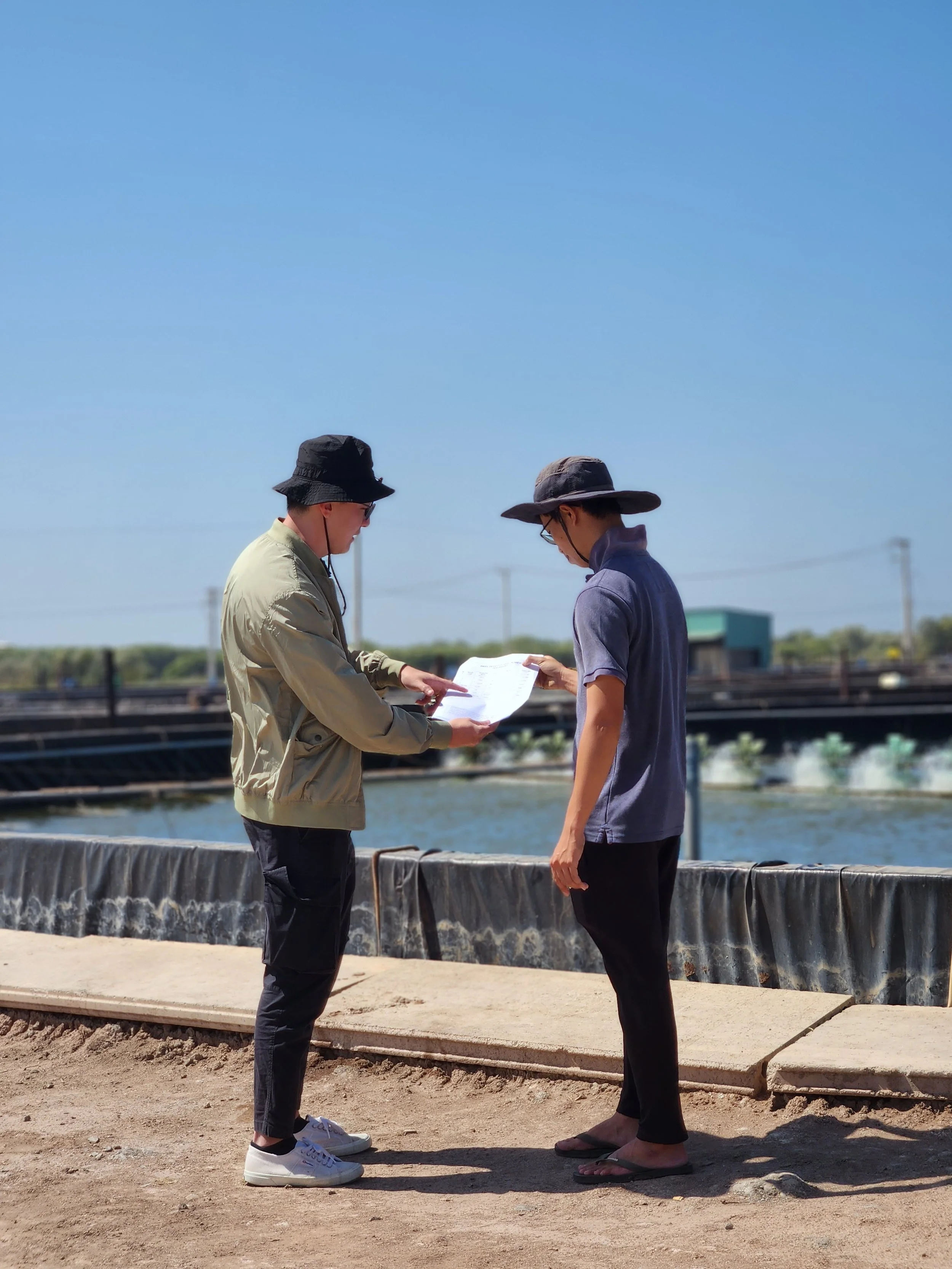
Documentation does not always translate into environmental stability
The Nature of SOPs: Always Running After the Problem
At their core, SOPs answer a very practical question: “Now that something has happened, what should we do?”
Toxic gases rise → apply probiotics.
Dissolved oxygen drops → increase aeration.
Shrimp slow down feeding → cut the ration.
There’s nothing inherently wrong with these actions. In fact, they’re necessary. But they are reactive by nature. By the time the procedure is triggered, the shrimp have already experienced stress. The system has already shifted.
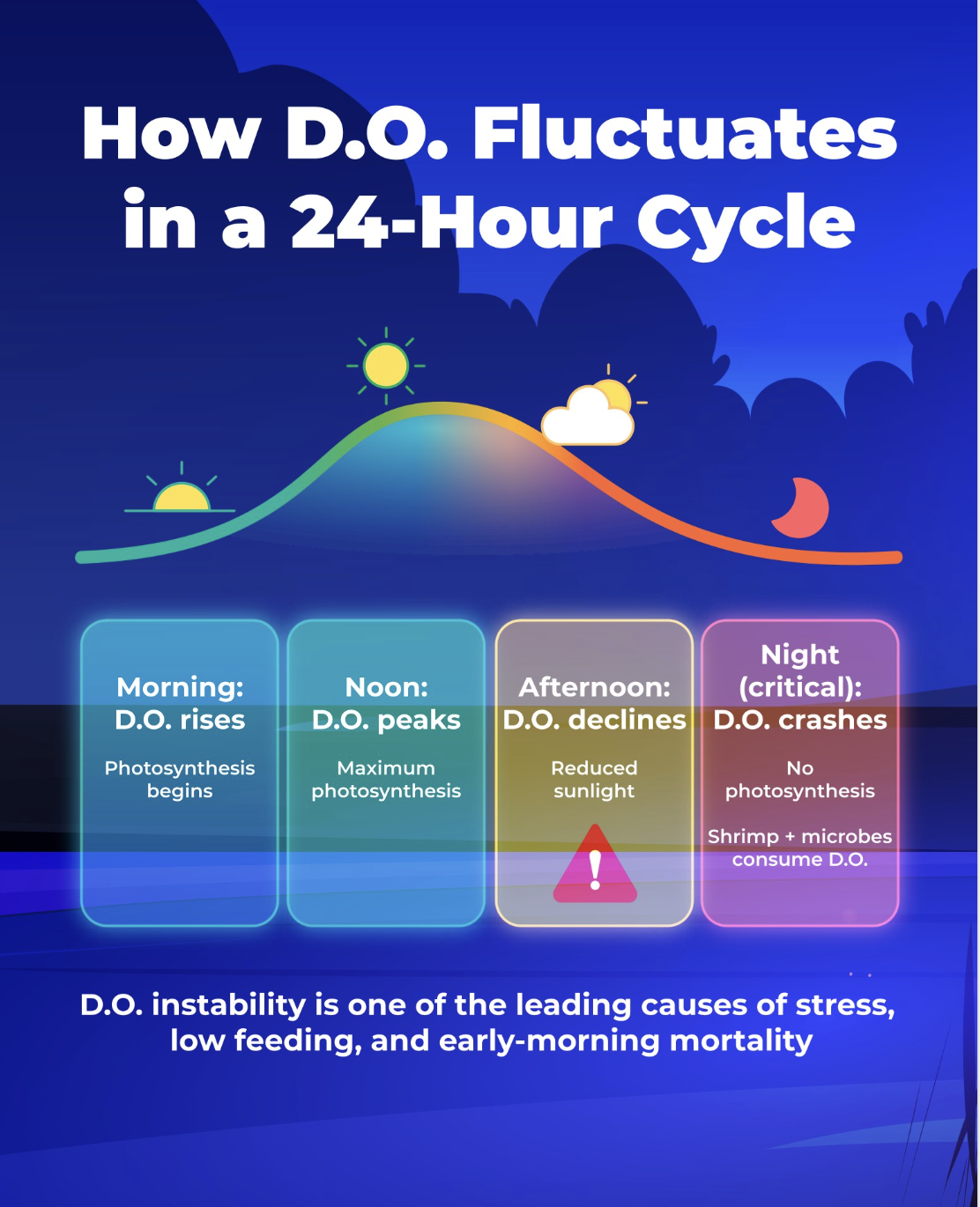
One clear example is dissolved oxygen. By the time low DO is detected, the drop has already been building for hours.
SOPs help teams respond consistently. What they don’t do is prevent instability from occurring in the first place.
Being efficient at solving recurring problems does not make the system stable; it simply makes the team better at managing instability. The farm may appear under control, but beneath the surface, the same structural pressures remain.
And this is where the conversation needs to shift away from how quickly we react, and toward why the system keeps creating the same conditions again and again.
The Trap of “Uniformity” in Shrimp Ponds
Most operational procedures today are built on the assumption that pond conditions are relatively uniform. In reality, a high-density pond is a highly complex and fragmented ecosystem. There are always “dead zones” where waste accumulates beyond the reach of paddle wheels, or oxygen stratification even when the surface appears heavily aerated. When the physical foundation of the pond from water circulation to waste collection structure is flawed from the design stage, no SOP can carry that burden. Even with strict adherence to procedures, instability will continue to repeat itself if the root cause lies within the system’s structure.
Rethinking Stability: Designing for Prevention Instead of Reaction
True stability does not come from reacting faster; it comes from reducing the probability of fluctuation in the first place.
Today, modern farming models are shifting from a “problem-solving” mindset to a “system design” mindset. In this approach, hydraulic structure, biological processes, and operational data are integrated into a unified system rather than treated as separate components. When these elements are aligned, water flow is designed to direct waste toward centralized collection points, and environmental parameters are monitored and adjusted based on real-time operational data instead of subjective judgment.
System-based integrated farming models such as the approach behind TOMGOXY are built on this philosophy. Instead of writing dozens of pages of procedures to teach people how to “put out fires,” the system itself is designed to maintain stability. At that point, the role of SOP changes completely: it is no longer an emergency lifeline whenever problems arise, but a structured framework that supports sustainable performance.
In the end, procedures can only maintain what the system allows. If stable and predictable results are the goal, the real question is not “Is our SOP detailed enough?” but rather “Was our system designed for stability from the beginning?”
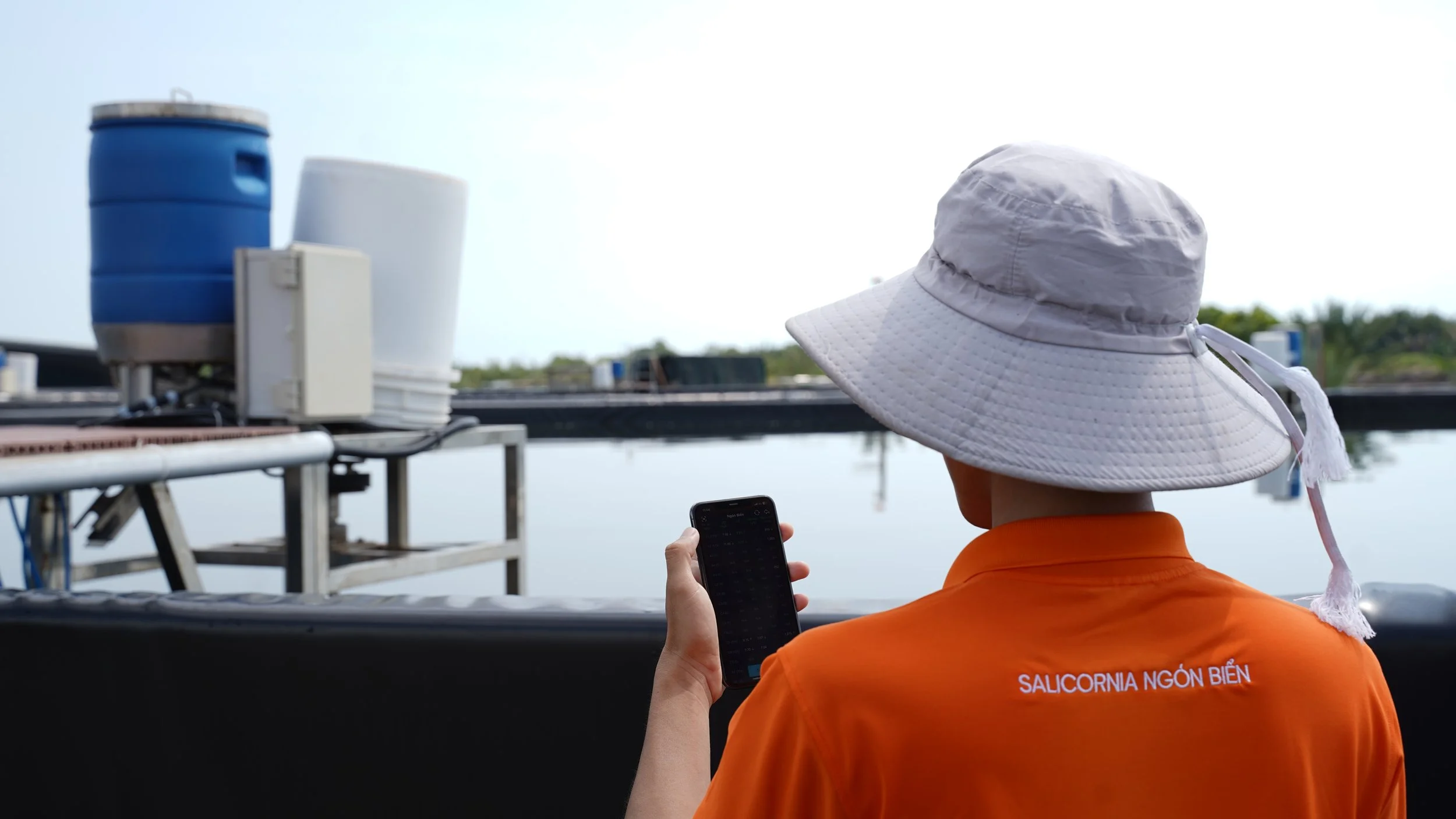
Stability begins with system design and real-time visibility into what’s happening beneath the surface.