
Why Indian Shrimp Farms Need More Than Aeration to Maintain Stable Oxygen
At many shrimp farms in India, the common response to rising biomass or declining nighttime DO is to extend paddlewheel operating hours or install additional aeration equipment.
Yet many farms still experience unstable DO even when their aeration systems are running continuously.
During a recent technical visit to RYNAN and Salicornia Farm, aquaculture businesses from India raised a practical question: if DO continues to fall during the night, does the farm have enough data and sufficient time to respond?
The issue is not only the number of devices operating in the pond.
Aeration helps add oxygen and create water movement. But oxygen control requires the farm to maintain stable DO conditions across the pond, especially during the hours when shrimp need it most.
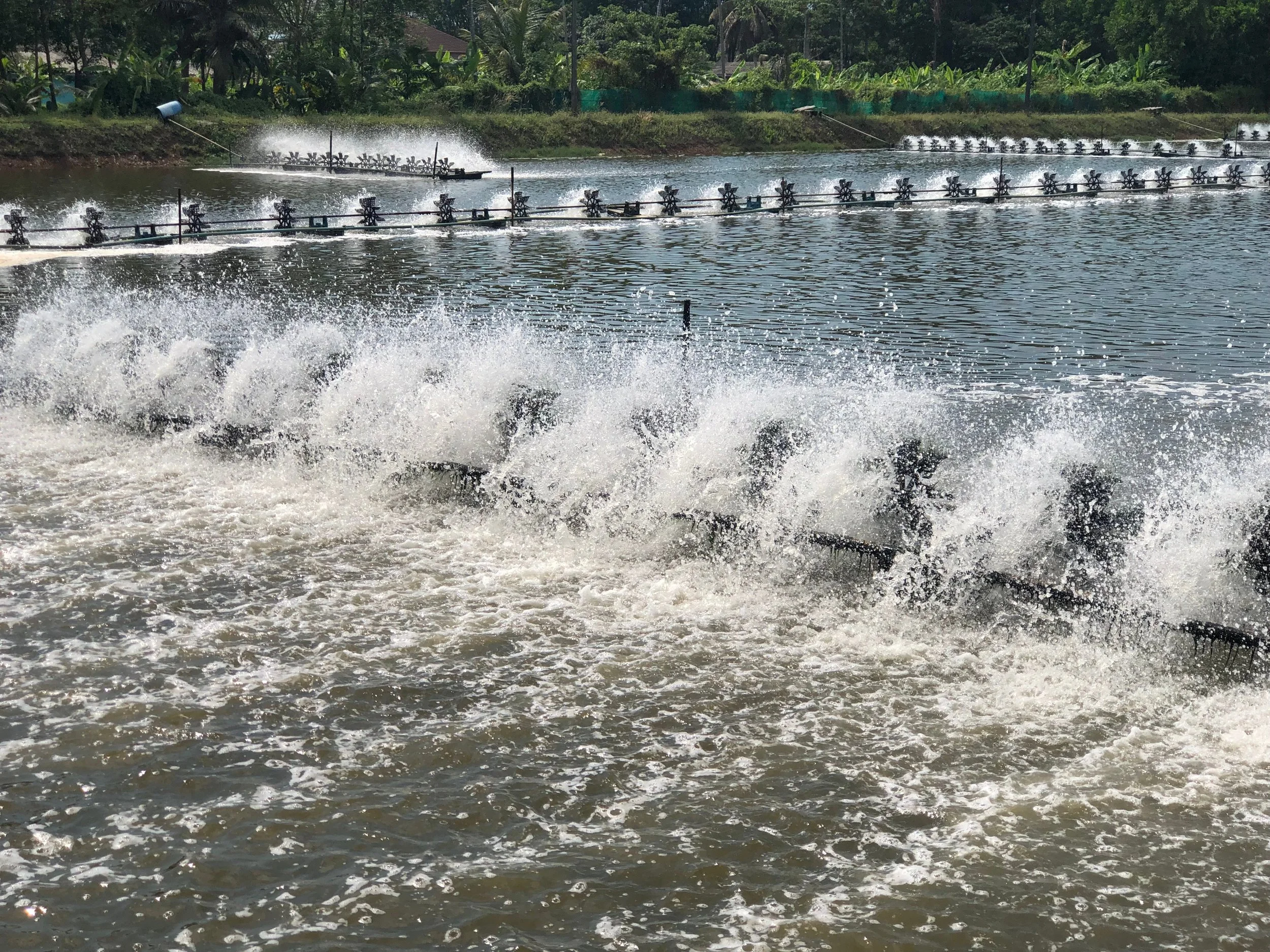
Mechanical aeration may create strong surface movement, but oxygen conditions can still vary across the pond and throughout the night.
1. Aeration Is Not the Same as Pond-Wide Oxygen Control
Paddlewheels can create surface movement and support oxygen transfer. However, visible turbulence at the surface does not necessarily mean that oxygen is being distributed evenly throughout the pond.
Actual performance also depends on:
Pond size and geometry;
Water depth;
Equipment placement;
Flow direction;
Biomass and feeding volume;
Pond-bottom conditions.
Some areas may receive strong water movement, while other zones remain less effectively circulated. Differences in DO can also occur between the surface and bottom layers.
The key question is therefore not only how many aerators a farm is operating, but:
Is oxygen being maintained consistently across different areas of the pond?
2. Oxygen Risk Increases with Biomass and Organic Load
The oxygen demand of a shrimp pond does not remain constant throughout the production cycle.
Under one operating scenario used to assess a 1,000 m² pond, oxygen demand may be approximately 7 kg per day when biomass is still low. By the end of the crop, when shrimp reach a larger size and both feed input and organic load have increased, total oxygen demand may rise to approximately 80–100 kg per day.
The actual requirement will vary depending on stocking density, survival rate, biomass, feed input, temperature, salinity and pond-bottom conditions. However, this difference illustrates an important operational issue: an aeration configuration that performs adequately at the beginning of the crop may no longer meet demand during the final production stage.
The risk is often most visible at night. After sunset, photosynthesis stops, while shrimp, plankton and microorganisms continue to respire. DO therefore tends to reach its lowest level during the hours before sunrise.
During prolonged cloudy weather, heavy rain, plankton fluctuations or periods of high organic load, this safety margin can become even narrower.
3. Waste Management Is Also Oxygen Management
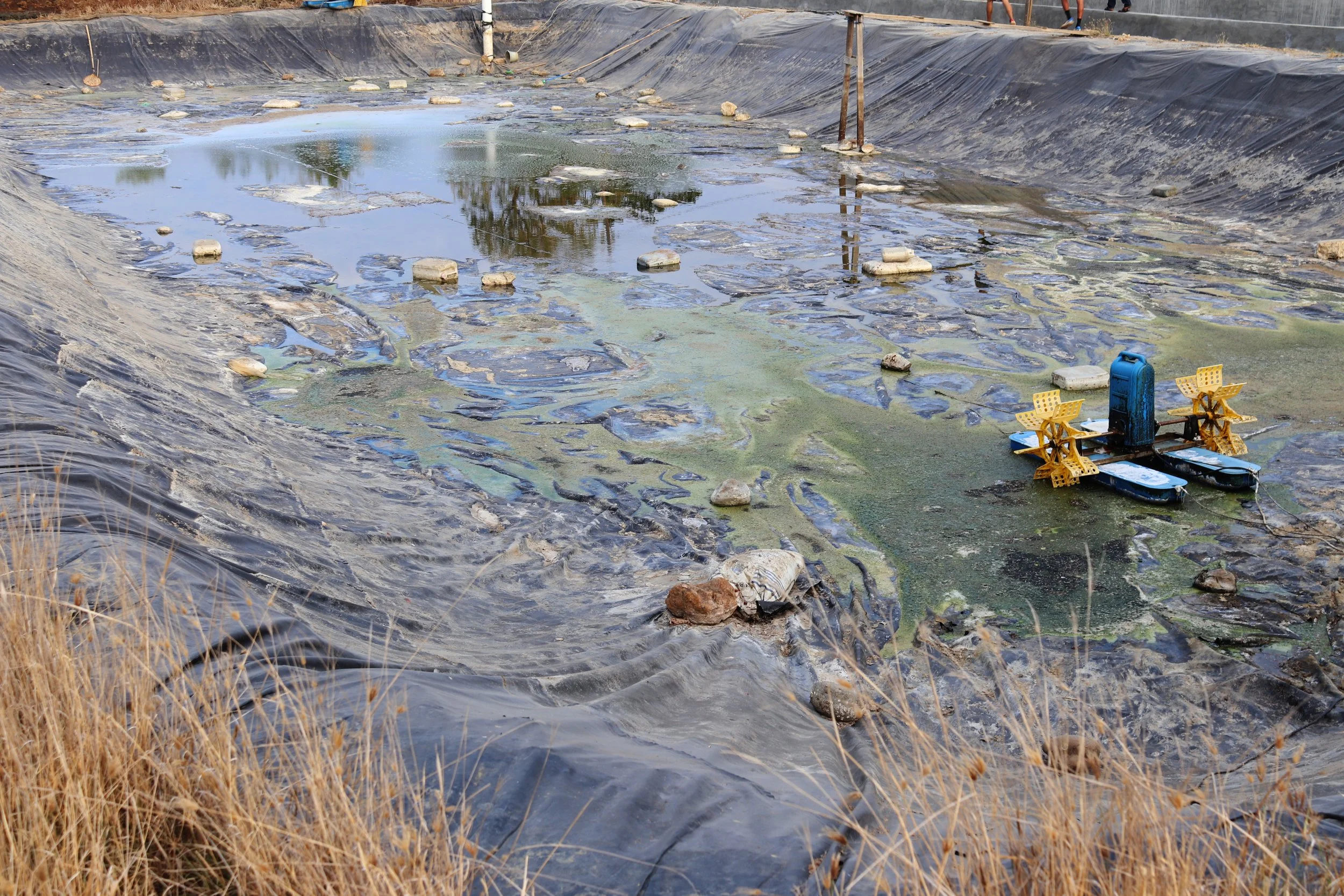
Uneaten feed, faeces and decaying organic matter continue consuming oxygen when waste is not collected and removed effectively.
One of the largest but most easily overlooked sources of oxygen consumption is found at the pond bottom.
In many traditional earthen ponds in India, the pond bottom is not designed to actively collect and remove waste throughout the crop. Uneaten feed, shrimp faeces, dead algae and other organic materials may therefore continue to accumulate and consume oxygen as they decompose.
If this waste is not managed effectively, a farm may continue increasing aeration capacity while still facing rising oxygen demand from the pond bottom.
Oxygen management therefore cannot be separated from feeding, flow design and waste collection. Adding more equipment may increase electricity costs without addressing the underlying cause of continued oxygen consumption.
4. Monitoring and Response Capacity Matter as Much as Aeration
Many farms still depend on manual DO measurements taken at specific times.
This approach provides information at the moment of measurement, but it does not show what happens between checks. If DO falls rapidly during the night or equipment fails, the operating team may identify the problem too late.
Monitoring systems do not replace farm operators. Their value lies in providing more continuous visibility, helping the team track trends, receive alerts and gain more time to respond.
The same principle applies to backup power.
Having a generator is not enough. The farm must ensure that it is correctly sized, supported by an appropriate power-transfer arrangement and tested regularly before an emergency occurs.
In high-biomass ponds, monitoring, alarms, backup power and clear operating procedures should be treated as part of oxygen management rather than as separate systems.
5. Effective Oxygen Control Requires a Complete System
Oxygen control in a shrimp pond requires several elements to work together:
Oxygen-supply capacity suited to the biomass and production stage.
Effective oxygen dissolution into the water.
Planned water circulation that distributes oxygen-rich water throughout the pond.
Feeding and waste management that reduce unnecessary oxygen demand.
Monitoring, alerts and backup response when conditions change.
When these elements are managed separately, a farm may own many pieces of equipment while still lacking overall control.
6. How TOMGOXY Approaches Oxygen Management
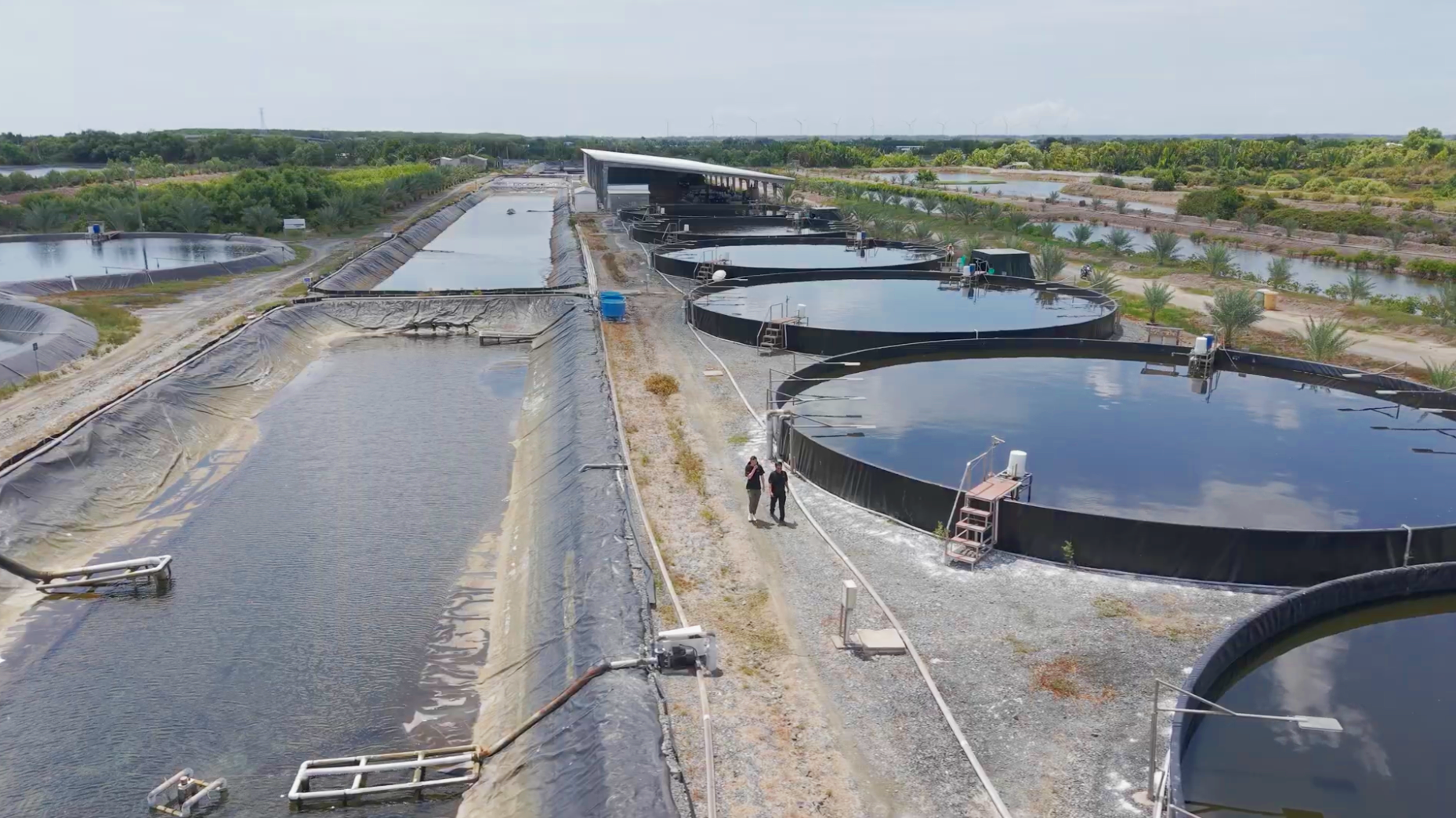
TOMGOXY connects oxygen supply, laminar circulation, waste collection and monitoring within one operating model.
TOMGOXY does not treat oxygen management as a standalone device. The model is built around the coordinated operation of oxygen supply, dissolution, water circulation, pond-bottom design, waste management, feeding and monitoring.
Within the TOMGOXY system:
The Oxygen Generator provides a concentrated source of high-purity oxygen;
The Multifunctional Device supports oxygen dissolution and creates one-directional laminar flow;
The water-flow pattern is designed to distribute oxygen-rich water throughout the pond;
The 10° sloped pond bottom helps move waste towards the collection area;
Sensors and the application support the monitoring of operating conditions;
The automated feeding system supports more consistent feed distribution.
These components are not designed to operate independently. Oxygen supply, circulation, waste collection, feeding and monitoring are connected within the same operating model.
The value of TOMGOXY does not come from replacing one type of equipment with another. It comes from managing the pond environment in a more coordinated way instead of addressing each operational problem separately.
What Should a Farm Assess Before Adding More Aerators?
Before increasing aeration capacity, farm owners and operating teams should answer four questions:
Where and when does DO usually reach its lowest level?
Does water circulation cover the entire pond or remain concentrated around the equipment?
Is waste being collected and removed effectively?
Does the farm have clear monitoring, alert and backup-response systems?
If these questions cannot be answered clearly, adding more horsepower may not provide greater control.
From Standalone Aeration to System-Level Oxygen Management
TOMGOXY does not rely on increasing the number of paddlewheels or mechanical aeration devices. The model manages oxygen through the coordination of a concentrated oxygen source, effective dissolution, laminar flow, pond-bottom design, waste management and operating data.
As stocking density, biomass and the investment value of each pond increase, adding more standalone equipment may not necessarily provide better control.
The objective is not only to introduce more oxygen into the water. It is to maintain stable oxygen distribution, control organic load and help the operating team detect changes in the pond at an earlier stage.
RYNAN recognises that farming conditions, salinity, power infrastructure and operating environments can differ across production regions in India. Through its collaboration with Corel Lifecare, customers can access local coordination to support needs assessment, technical communication and TOMGOXY implementation.
The combination of RYNAN’s technical experience and Corel Lifecare’s local market knowledge allows each solution to be considered according to the operating conditions of the individual project, rather than applying the same configuration to every farm.
Is your farm increasing aeration capacity while DO remains unstable at night?
Contact RYNAN and our Indian Partner, Corel Lifecare to discuss oxygen demand, water circulation, waste management and an operating approach suited to your project.